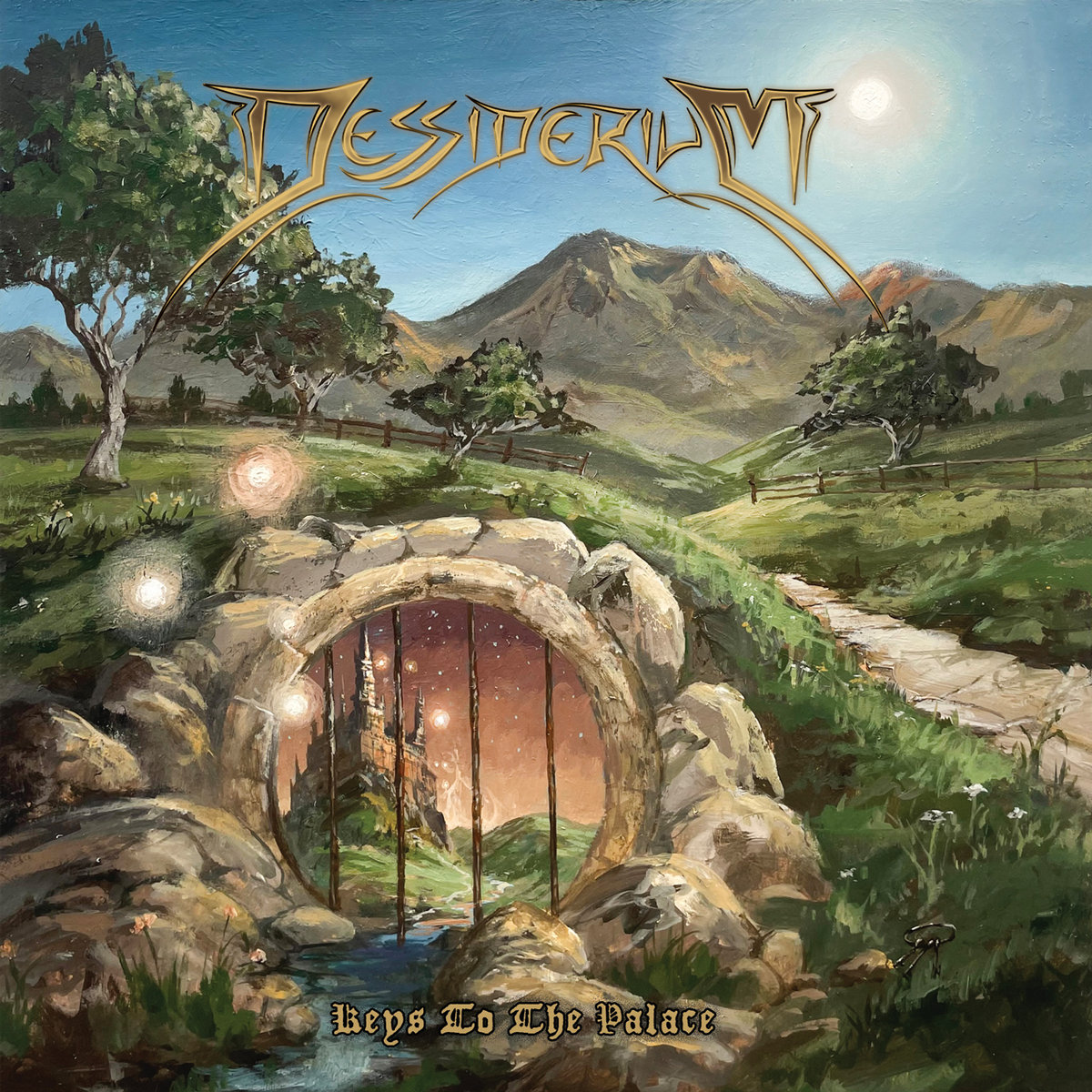
There is a version of this album that does not exist. In that version, Haddad follows the trajectory laid out by Aria and Shadow Burn — more blackgaze, more tremolo, more melancholy. That album would have been good. It would have been safe. Instead, he made Keys to the Palace, and it is the most joyful thing extreme metal has produced in years.
Nothing about this record should work. A one-man melodic/progressive death metal project releasing an hour-long album built in major keys, thick with synths, splitting its time between harsh screams and clean vocals — on paper it reads like a disaster. In practice it is devastating. Not because it is sad, but because it is so relentlessly, unapologetically alive.
The Riffs
Let’s start with the obvious: the guitar work on this album is obscene. Haddad writes riffs with the density of technical death metal but the melodic instincts of someone who grew up on film scores and post-rock. “Dover Hendrix” is ten and a half minutes of constant escalation — riff after riff tumbling over each other, none of them filler, all of them memorable. The song never stops moving and yet somehow never feels rushed.
“In the Midst of May” opens the record like a door being thrown open onto a sunlit field. The guitar tone is crystalline, the synths swell underneath like weather systems, and by the time the first harsh vocal lands you are already committed. This is not an album that eases you in. It grabs you.
The Suites
The record’s architecture announces its ambition through two multi-part compositions. “Pollen for the Bees” arrives in two movements — a three-minute overture that functions as a thesis statement, followed by a nine-minute expansion that takes every idea from Part 1 and detonates it. The transition between parts is seamless. You do not notice it happening until it has already happened.
The title suite — “Keys to the Palace” in three parts — closes the album and constitutes its emotional and compositional peak. Part 1 is a patient build. Part 2 is the payoff: the single most triumphant stretch of music on the record, riffs cascading over synth pads that sound like they were borrowed from a cathedral. Part 3 resolves everything. It brings the album home.
The Voice
Haddad’s vocals have always been competent. Here they are confident. The clean singing, which on earlier records could feel tentative, lands with conviction. The harsh vocals remain ferocious, but the balance — roughly half and half — gives the album a dynamic range that most death metal doesn’t bother attempting. “A Dream That Wants Me Dead” plays the two styles against each other across seven minutes, and the contrast makes both more effective.
Why It Matters
“Magenta” sits near the back of the tracklist and contains a passage around the four-minute mark where the synths drop out, the guitar goes clean, and the song breathes for exactly long enough before the full band crashes back in. It is a small moment in a dense record, but it tells you everything about why this album works: Haddad knows when to push and when to pull back.
Keys to the Palace is the rare album that changes what you think a genre is capable of. It is melodic death metal that sounds like hope. It is progressive metal that never forgets to be visceral. It is an hour of music that earns every second of its runtime.
I have listened to this record more times than I can count. It has not gotten smaller.
10/10